
24 hour Criminal Law Service

Kevin featured on Libby Kirwin's blog


The following article was recently featured on Libby Kirwin’s real estate blog, “Living with Libby.”
Click here to view the post on Libby’s site.

“Men We Love: Kevin Hagan, Esq.”


png

jpg2-1024x682


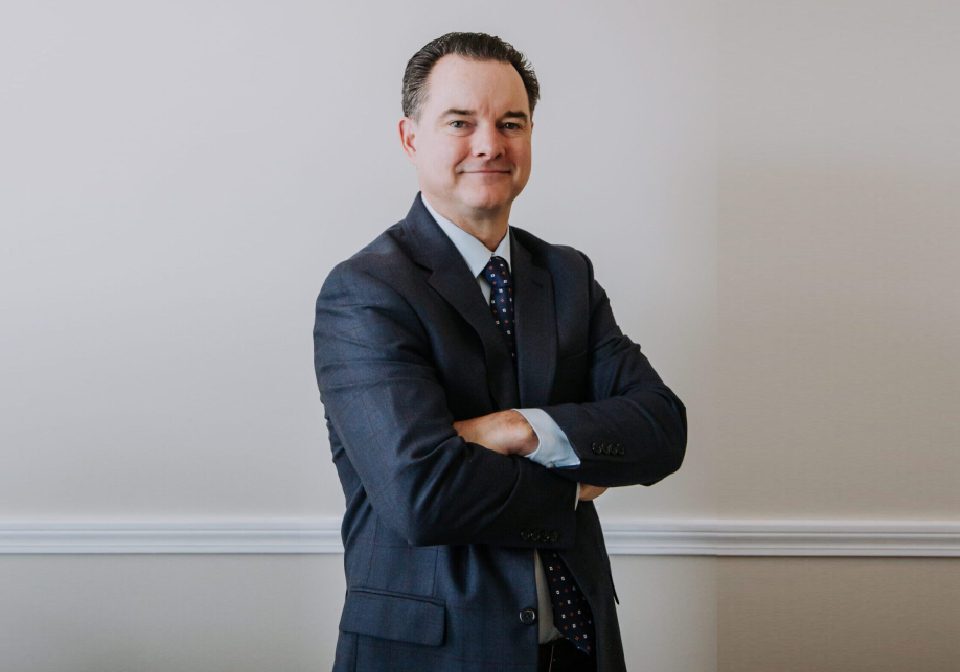
“After spending four years at the office where I began Libby Kirwin Property Management, I was happy to turn over the keys to my office at 105 Memorial Blvd to Attorney Kevin Hagan, as he began his new venture as a solo law practitioner.

“Of course, I knew that Libby would be able to secure me the perfect spot,” said Kevin. “I love the office on Memorial Boulevard as much as she did and we all know that location, especially in Newport, is paramount.”

After attending Providence College, Kevin earned his law degree from Roger Williams Law School and later served on the university’s Alumni Board.  Having recently gone the route of a solo practitioner, Kevin enjoys a broad spectrum of practice areas including family court cases, criminal cases and accident cases of every variation.

“It has been an exciting and rewarding experience to live and work in Newport with my wife Domenica and son Thomas.” Newport is a city that has captivated Kevin since the time he used to visit as a child.  Having the opportunity to represent the legal interests of others that also live in Newport County was spawned as a young prosecutor in the Newport Office of Attorney General, and prior to that, as a Newport Superior Court Law Clerk.

Kevin feels he has been fortunate to learn this job from the ground up. He trained to be a trial lawyer with some of the greatest litigators that have practiced in this region.  However, his transition into private practice began with the most important consideration of all – finding the perfect office!

Kevin serves as an adjunct professor of Legal Studies at the Community College of Rhode Island, and he was recently appointed by the Chief Judge of the Rhode Island District Court to serve as a Justice of the Peace and Bail Commissioner in Newport County.

Newport enjoys a close knit bar, and Kevin says it has truly been a privilege to be able to serve the residents of Newport County and try a few cases along the way!

"The Newport Lawyer"

It has been an exciting and rewarding experience to work and live in Newport, Rhode Island – a city that has captivated me since the time I used to visit as a child. The opportunity to represent the legal interests of others that also live here was spawned as a young prosecutor in the Newport Office of Attorney General, and before that, as a Newport Superior Court Law Clerk. I have been fortunate enough to learn this job from the ground up, training to be a trial lawyer with some of the greatest litigators that have ever practiced in this region. My transition into private practice began under the tutelage of Joseph “Terry” Houlihan, and he spent the time to show me what this profession was all about. Although Terry has recently been elevated to the bench as a District Court Judge, I have gone the route of a solo practitioner, handling primarily family court cases, criminal cases and accident cases of every variation. Newport enjoys a close knit bar, and it has truly been a privilege to be able to serve the residents of Newport County and try a few cases along the way!

"Rhode Island Breathalizer Issues"

Cross-examination of the prosecution expert can make a point to the jury that the defendant's rights should not be determined by small samples and breath-alcohol measurements involving miniscule quantities. The cross-examiner could probably get an admission from the expert that, if the amount of alcohol involved in a particular test were on a table in front of the jury, they could not see, smell, taste, or feel it. However, it would probably do the cross-examiner no good to push the expert too far on the matter of minute quantities since, given an opportunity, the expert would point out that making measurements of small quantities is not uncommon with modern laboratory procedures. Cross-examination of the expert to emphasize to the jury the opportunity for error in measuring extremely minute quantities of breath-alcohol might run as follows: ...

Q. Breath analysis for alcohol amounts to this, doesn't it: a breath-test device collects a certain amount of air exhaled from the subject's lungs and passes that air through the chemicals in a test ampoule; the chemicals gather the alcohol out of the sample; and the device measures the alcohol absorbed by the chemicals.

A. That is right.

Q. Any claim to accuracy made for breath-testing devices assumes that the procedure measures almost infinitesimal quantities of alcohol found in the breath, is that correct?

A. Yes.

Q. As I understand it, a Breathalyzer collects the equivalent of 52.5 cubic centimeters of breath, is that correct?

A. That is correct.

Q. How many cubic inches does 52.5 cubic centimeters amount to?

A. A little more than 3 cubic inches.

Q. And the breath-alcohol reading is converted by the testing device into a blood-alcohol reading?

A. Yes.

Q. You have testified to a blood-alcohol reading of the defendant's breath sample taken on , of 0.15 percent, is that correct?

A. Yes.

Q. A reading of 0.15 percent blood-alcohol presumes to indicate that in the defendant's blood there were 15 parts by weight of alcohol in every 10,000 parts of blood, is that correct?

A. That is correct.

Q. And since the specific gravity of alcohol is quite close to four-fifths that of whole blood, that same concentration would amount to only two parts of alcohol by volume in every 1000 parts of the defendant's blood, is that correct?

A. Yes.

Q. However, it was the defendant's breath that was tested and not his blood?

A. Yes.

Q. And breath tests for alcohol are not as precise as blood tests for alcohol, is that correct?

A. Yes.

Q. Hasn't the alleged relationship between breath-alcohol and blood-alcohol been stated in fixed terms, presumably applying to all persons?

A. Yes.

Q. What is that relationship?

A. It is 1:2100. Blood-alcohol is 2100 times greater than breath-alcohol in a given subject.

Q. However, aren't there individuals in whom the relationship varies from the average?

A. Yes.

Q. If we accept, just for the moment, a breath-alcohol to blood-alcohol ratio of 1:2100, the quantity of alcohol measured in the breath sample would be equal to the quantity of alcohol to be found in 1/40th of a cubic centimeter of the defendant's blood?

A. That is correct.

Q. Is it true that one cubic centimeter of a liquid such as blood is equivalent to 0.034 fluid ounces, or very close to 1/30th part of an ounce?

A. That is correct.

Q. So, then, the amount of alcohol in the breath sample collected from the defendant would be equivalent to the amount we would expect to find in 1/30th part of 1/40th part of an ounce, 1/1200th part of an ounce, or 0.00085 ounce of his blood?

A. Yes.

Q. To pin these extremely small amounts down further, since there are 480 drops in an ounce by apothecaries' fluid measure, the equivalent in blood of the amount of breath analyzed is less than half a drop—amounting, as a matter of fact, to 408/1000ths of a drop?

A. That is correct.

Q. And the amount of alcohol gathered by the chemicals to produce a blood-alcohol reading of 0.15 percent would be equivalent to only 2/1000ths of that half drop of blood, or eight ten-thousandths of a drop, or five hundred-thousandths of a cubic centimeter, or seventeen ten-millionths of an ounce?

A. I assume you are correct.